What Medical Measures Are Un/reasonable For The Very Sick?
Question: A friend’s old parent with advanced dementia has been on NG (nasogastric) feeding for many years, and is hospitalised with persistent low oxygen, daily phlegm suction and suspected pneumonia. The doctor is asking the family to decide on the code status (i.e. kind of emergency care wanted if the heart stops beating or the breathing stops). How should they decide from the Buddhist perspective, for the below measures?
[1] CPR (Cardiopulmonary Resuscitation) / DNAR (Do Not Attempt Resuscitation): If heart or breathing stops.
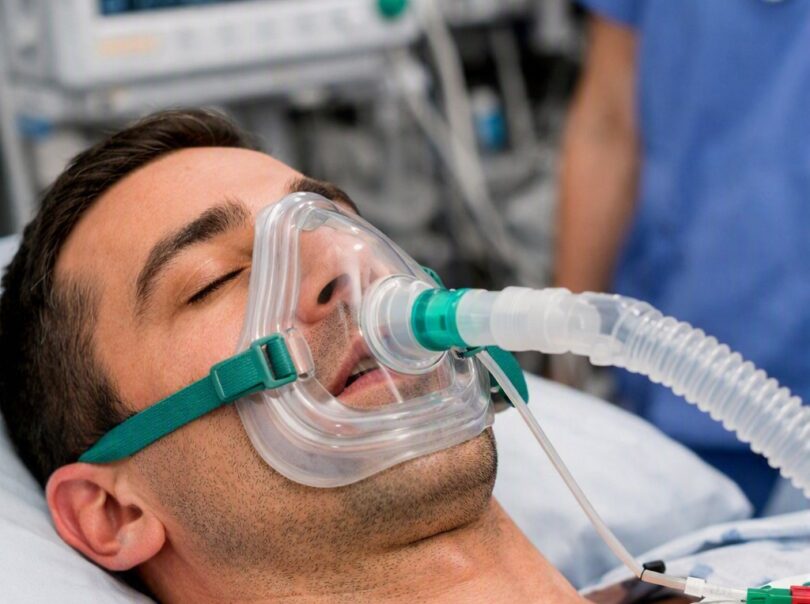
[2] Intubation And Ventilation: If breathing is failing but the heart is still beating, intubation is placement of a breathing tube into the windpipe, and ventilation is via a machine which pumps air in and out of the lungs through the tube.
[3] Non-Invasive Respiratory Support (NRIS): Whether to use high flow oxygen if ordinary oxygen is low, with CPAP (Continuous Positive Airway Pressure) with a tight-fitting mask to support breathing without intubation, or BiPAP (Bilevel Positive Airway Pressure) which is similar to CPAP, but uses higher pressure for breathing in, and lower pressure for breathing out.
[4] ICU (Intensive Care Unit) / Organ Support: Whether to escalate to ICU and/for stronger life-support measures if critically ill.
[5] Other Treatments: Whether treatments such as antibiotics, suction and other supportive care should be continued. (This list of treatments is not exhaustive.)
How do we distinguish between allowing death from the underlying illness(es) to occur naturally, versus deciding that becomes killing or hastening of death unnaturally? (Killing of a parent breaks the First Precept, and leads the Five Heinous Transgressions [五逆罪].)
Answer: Based on the situation mentioned, with old age and multiple challenging conditions, (corresponding to the numbered above),
[1] This seems excessive as is forceful.
[2] This seems excessive as it causes great discomfort on top of existing discomfort.
[3] These seem reasonable.
[4] This seems excessive as is already very weak.
[5] If the specific means chosen does not cause significant pain and/or discomfort, this seems reasonable.
As forcefully preventing death, which is eventually inevitable, is to make living ‘hellish’, this is unreasonable. Therefore, only non-punishing means (that does not give ‘hell’) for sustaining life is reasonable. Being reasonable does not cause or hasten death.
The way to lessen suffering faster and offer a way out is to offer guidance (开示) and support-chanting (助念) till after departure. Ideally, there will be reaching of Pure Land. However, even hearing Āmítuófó’s name (阿弥陀佛) without the Three Provisions (三资粮) can prevent falling into the evil realms (恶趣). For a longer procedure, see https://purelanders.com/wake, though the Amitābha Sūtra《阿弥陀经》can be skipped, unless there is enough time before the dying moment.